Monday, December 31, 2012

The North Western Advocate and the Emu Bay Times, Tasmania, Monday 23 July 1900
Sydney, Sunday. — A painful sensation was created yesterday by the receipt of intelligence of a series of diabolical murders by aboriginals in the Coonamble district.
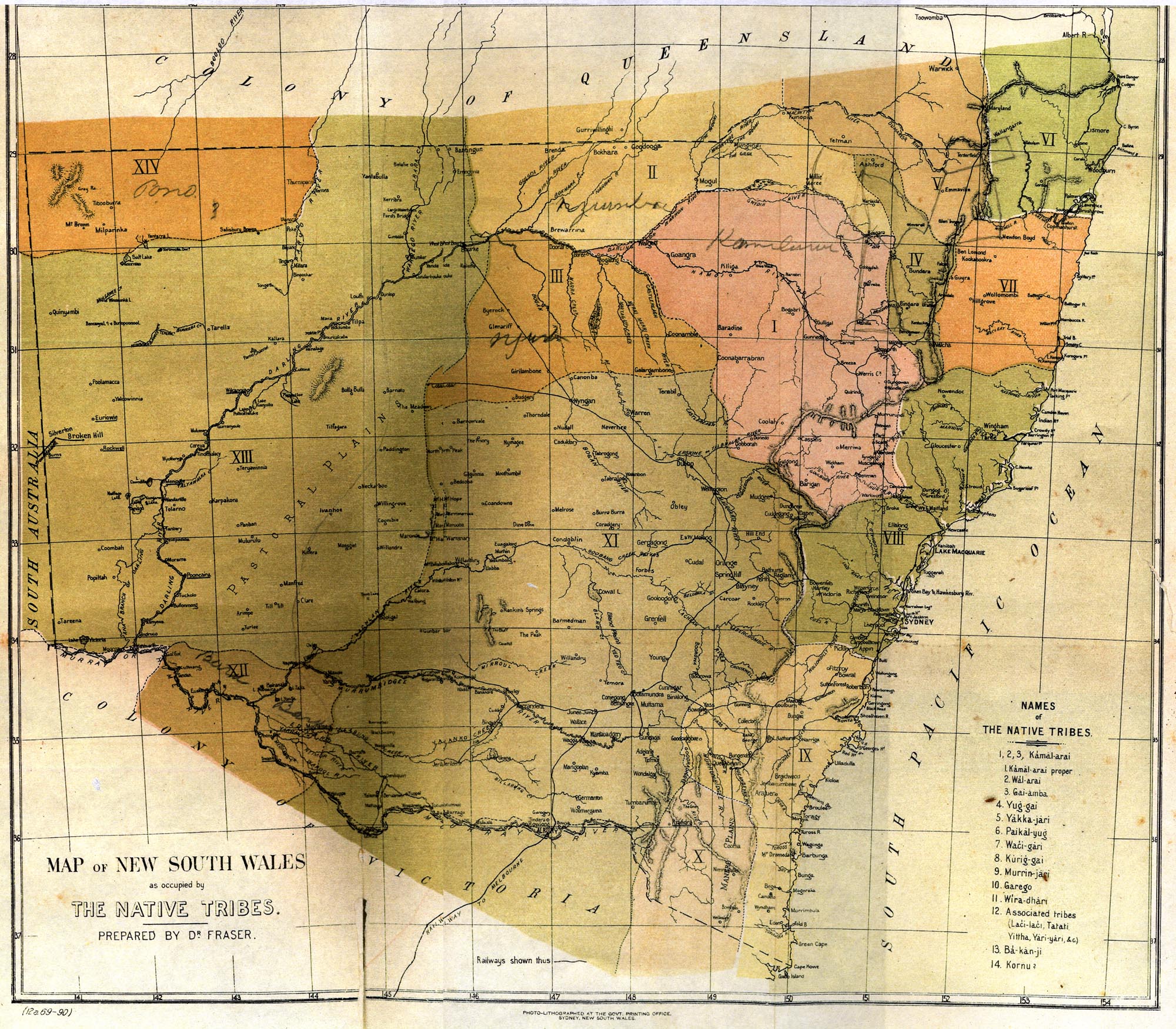
The exact location of the scene of the outrages is Breelong, a post town 10 miles from Gilgandra, which is in the North-Western Division of New SouthWales, and nearly 800 miles from Sydney.
Mr Mawbey, a pioneer of the district and a well-to-do man, owns a large area of land on the banks of tbe Castlereagh River, and lately built a new home there.
On Friday, however, he was staying at his old house, which is the Breelong post office. ...
The Inquirer & Commercial News, Perth, Friday 27 July 1900
... The aboriginals who are supposed to have committed the murders are Jimmy and Joe Governor, of Dunson [Denison]Town, Jack Porter, Jack Underwood, and a boy of 14 years of age known as 'Crooked.'
... Mrs. Mawbey regained consciousness on Saturday evening, and was able to make a short statement.
She said that Jimmy Governor hit her with a tomahawk.
She saw Jacky.
He had a tomahawk.
She saw only two, but she could hear more outside.
She could hear all of them
... The Mawbsys were among the pioneers of the Gilgandra district, owning a large area of land on the Castlereagh River.
The Sydney Morning Herald, Monday 23 July 1900
... In an interview with Mr. Mawbey he said -" The first I heard of the outrage was from my son Bertie, who ran down to me at the old house and told me that 'Jimmy Joe' Governor was killing everyone up at home.
I immediately woke up Reggie, my son we took our rifles and ran up to the house.
On crossing the creek I stumbled over one body, and I discovered that it was Hilda, one of my daughters.
On gaining the bank again,about 100 yards further, I struck the body of Miss Kerz, our school teacher.
On reaching the house I only just glanced in and saw what was the matter.
I left my two sons, Reggie and Bertie, armed with a rifle each in the kitchen, and made off to the camp.
When I got to the house there was no one in it.
I rushed back, and sent for Dr. Burton and the police.
You know all the rest."

Sunday, December 30, 2012

Warwick Examiner and Times, Queensland, Wednesday 1 August 1900
The Aboriginal Murders.
HUNTING DOWN THE PERPETRATORS
... The Premier of N.S.W. says if it costs £2000 to capture the blacks the Government is prepared to pay it.
... The aboriginal Jacky Underwood, who was recently arrested for the Breelong murders has now been fully identified.
At the Mudgee Police Court on Friday, the prisoner was brought up.
It was stated in evidence that while the prisoner was being escorted from Qulong [Gulgong] to Mudgee he made a statement to the effect that he was in camp at Breelong with Jimmy and Joe Governor.
Jimmy Governor wanted money from Mawbey, but the latter would not give any more until the contract upon which Governor was engaged was finished, and Jimmy said he would kill Mawbey.
... Jacky Porter and the black boy, Jimmy, and Joe Governor, left the camp together last Friday night, Jimmy carrying a rifle and three nulla nullas, and Joe a nulla nulla and tomahawk. After the Governors returned to camp all left together, and when they had proceeded half a mile in the scrub, the two Governors wanted to kill Mrs. Governor and the child, but Jacky Porter and Underwood would not allow them to take more lives.
... The two Governors said they were going to Wollar to kill all the blackfellows there, and then make for the wild nulla mountains and kill all the people there.
... Various reasons are given for the committal of the murder at Breelong.
It is said that Jimmy Governor's wife was slighted for the life she led at the black camp at Breelong and this caused a bad feeling to arise with the blacks.
... Mr. Richards, M.P. for Mudgee, points out that the persons killed by tbe blacks, or threatened by them, are chiefly those for whom they have worked before or had some grudge against.
...Mr. Mawbay, the father of the girls killed at Breelong, says:—I have never seen Jimmy Governor drunk, nor have I known him to be drunk.
I have never known a drop of grog to come into the camp. I am quite positive that he was sober that night of the murder.
He never showed violent temper, nor was he of a quarrelsome disposition.
The boys Percy and Reggie had heard Jimmy Governor say he would like to be a bushranger as no police would ever catch him.
He was making about 6s a day when he was working with me.
He spent a lot of time catching rats and 'possums to eat.

Friday, December 28, 2012

Examiner, Launceston, Tasmania, Thursday 26 July 1900
THE BLACKS. -- GILGANDRA MURDERS. LOCALITY OF THE OUTRAGE. INTERVIEW WITH MR. A. W. MILLER.
Mr. A. W. Miller, of Ashfield, who owns a deal of property in the Gilandra district, on Saturday furnished a Sydney "Daily Telegraph" reporter with some additional particulars regarding the locality of the murder and the victims.
"I have known Mr. John Mawbey for about 25 years," said Mr. Miller.
"He has a large run at Breelong, and has always been regarded as a quiet, industrious, and thrifty man.
The family was large, and the home circle a happy one.
One son came to Sydney to offer himself for service in the.
Transvaal with the bushmen's contingent, but I cannot say whether he joined that body.
As far as I can judge, Mr. Mawbey must have been absent on another part of the run when the terrible crime was committed.
"I know the district thoroughly, and was surprised to hear of the outrage, as the local tribe of blacks had died out long since.
It has always been the custom for aborigines, when on the move from other districts, say hundreds of miles away, to ascertain—how, I can not explain—the whereabouts of old camps, and this may account in some measure for the appearance of these ruffians at Breelong.
"The country about Breelong is of a very scrubby nature, and the fact that the criminals will be on foot will render the task of making a capture a difficult one, for a time at least.
There will be no occasion for the natives to leave the scrub for food, as opossum and game abound in the bush.
Horsemen will be hampered in their movements by the numbers of fences that will be encountered, as the land is for the greater part enclosed.
If, however, there is another aboriginals' camp in any of the adjacent districts, this will assist to bring the culprits to justice, for the fugitives will make for their countrymen, who rarely keep a secret...
"Mr. Mawbey will be remembered about Mudgee and Coonamble, where he followed the occupation of a dealer in a large way, before he took to farming.
In the last-named pursuit he has been very successful."


Tuesday, December 18, 2012

POSTS IN PADDOCK THUMBS DOWN


It has taken me just over a year to be able to write a review of the theatre performance and installation, Posts in the Paddock, that was staged for the first time in Sydney last November.
The production elements – sounds, sights, sets and symbols – were very sophisticated and stimulated all the senses, sometimes all at once.
But because there was so much going on production-wise, it was difficult to focus on the plot, the elements of the story.
The problem with this play as I see it is that it is not honest.
It claims to be about the family of one of the performers in the play, Clare Britton, who is an indirect descendant of the O’Brien family, two of whose members were murdered by the Governor brothers.
The heavily pregnant Elizabeth O’Brien and her 15-month-old toddler son, James, were slaughtered in their home while husband and father, Mick O’Brien, the real target of Jimmy’s revenge, was out collecting firewood.
But this story, the O’Brien story, was never the focus of the play.
Instead my ancestors, Sarah and John Mawbey, were depicted as the villains, and the posts meant to be fence posts on the O’Brien property, conveniently became those Jimmy and Joe were constructing on the Mawbey selection at Breelong.
This play twists the truth, distorts the real story, and implicates my family as exponents of an evil empire spawned by colonial invasion and missionary zeal.
The story lacked basic integrity in that it was not what it was supposed to be about.
Instead it victimised and vilified the Mawbey family, still traumatised by Jimmy Governor’s brutality towards them more than 100 years ago.
We have been used for political purposes, and I object to that.

Saturday, December 15, 2012

JACKY UNDERWOOD REVISITED


The Brisbane Courier, Thursday 25 August 1900
TRIAL.
SYDNEY, August 22.
At the Gilgandra Police Court to-day, the aboriginal Jacky Underwood was brought up on the charge of 'murdering t/he members of the Mawbey family at Breelong. 
When Mr. A. F. Garling, who had taken Mrs. Mawbey's dying depositions, had finished his evidence, which disclosed no new facts, Underwood was asked if he had any questions to put to the witness. 
He at once said, "Jimmy hit the boy. The woman was lying on top of the boy when I came. 
Jimmy told me to go outside and see if'anybody went outside through the windows. 
I saw two girls go through the window and come back, but did not tell him."
Later on the accused made a statement in which he said Jimmy Governor did most of the murdering. 
He (accused) hit one girl, and he put her back in one of the rooms in the house. 
He saw one of the boys lying under the bed, but when Jimmy Governor asked him if there were any more in the room he said they had ail gone away. 
Jacky Underwood also said he saw Jimmy Governor kill Miss Mawbey near the creek, and Miss Kerz. The night before the murder Jimmy Governor had a row with his wife, and he intended to kill her. 
They went to the hut where Mr. Mawbey was staying, intending to kill him, but they were too frightened when they got there. 
The prisoner Jacky Underwood was committed for trial.