Tuesday, April 26, 2011

JIMMY'S MURDER VICTIMS


Sarah Mawbey (44) and three of her nine children,
Grace (16), Percival (Percy) (14) and
Hilda May (11), brutally murdered at their home
at Breelong by Jimmy and Joe Governor and
Jacky Underwood at 10.30pm on Friday 20 July 1900.
Buried in Church of England section at Gilgandra.


Helena (Ellen) Kerz (21), brutally murdered by
Jimmy Governor at Breelong on 20 July1900.
Buried in Roman Catholic section at Girilambone.


Kyrien Fitzpatrick, brutally murdered by Jimmy
and Joe Governor on 26 July 1900 at his home.
Buried at Wollar.


Alexander (Sandy) McKay who was brutally
murdered by the blacks on 23 July 1900
aged 70 years. Buried at Gulgong.


ELIZABETH O'BRIEN, her 15-month-old son
James and her unborn child, murdered by Jimmy
and Joe Governor in July 1900 at their home at
Merriwa. I have been told by a descendant that
they were refused burial in Catholic consecrated
ground at the local cemetery because the child
had not been baptised. But Moore and Williams
say they did have a Christian funeral service.
Buried Roman Catholic section at Merriwa.

[Source of photos: Australian Cemeteries Index
http://austcemindex.com/]

Wednesday, April 20, 2011

RIPPLE EFFECT OF THE GOVERNOR REIGN OF TERROR

In a matter of days after Jimmy began his killing rampage on the night of Friday 20 July 1900, there were 10 murder victims.
This figure includes the about-to-be-born baby of Elizabeth O'Brien.
Then there were those who were physically and psychologically wounded by the Governors but managed to survive.
ELSIE CLARKE, 18, the younger sister of murdered Sarah Mawbey,
CATHERINE BENNETT (nee LALOR), the midwife,
ISABELLA BURLEY, the 15 year old girl who was raped by Jimmy in the bush at gunpoint.
That's three more people, all women, who would never forget Jimmy Governor.
His indelible black mark had been embedded permanently in their psyches.
But there were also the others who were psychologically 'soul murdered' by Jimmy.
Those so traumatised at what had been done to their loved ones that they never recovered.
Like the two husbands and fathers, JOHN MAWBEY and MICK O'BRIEN, who lived the rest of their mortal lives as zombies, in a state of suspended animation.
In the old Phantom comics, a zombie was described as 'the ghost who walks'.
These two men might as well have been dead.

Also traumatised were all the wives and children and parents of the murder victims:
* The six surviving Mawbey children - John Jr, Garnet, Reginald (George), Sydney, Albert, and Cecil.
* Their Clarke uncle Fred Clarke and aunt Emily Clarke (living with her big sister Sarah as her adopted child) who were also at the murder scene.
* Their cousin, George Mawbey, son of their father's younger brother, who was at the murder scene.
* Mary McKay and her niece, Louise who lost their husband and uncle.
* Mr and Mrs Kerz, Martin and Margaret, the parents of the murdered school teacher, and her brothers and sisters, neices and nephews.
* Bernard, the nephew of Keiran (correct spelling: Kyrien, possibly derived from Catholic Latin Mass prayer, Kyrie, 'Lord have mercy') Fitzpatrick who witnessed his uncle's murder.
* The parents of the underage girl who was raped by Jimmy.

The number of people who suffered direct psychological 'collateral damage' as a result of the brutality of Jimmy Governor and his partners in crime was at least 50.
However, a 'ripple effect' meant that meant many other people were traumatised in varying degrees.
* those who were confronted with the battered bodies of the murder victims like doctors, chaplains and undertakers.
* those living in outlying areas who were too afraid to stay in their homes and moved into the town for safety, leaving their stock and crops unattended.
* those who encountered the Governor brothers during their rampage and who lived to tell the hair-raising stories.

Thursday, March 24, 2011

JIMMY GOVERNOR'S 'HIT LIST'

One of the most remarkable aspects of Jimmy Governor was his 'hit list' of people he deliberately set out to kill.
I doubt if the 20th century American gangster, Al Capone, had one as long as his!
All on his list had offended him, his sense of pride in who he was, in one way or another.
Within the Aboriginal culture, 'pay back' for serious offences against another was publicly meted out by spearing the transgressor in the thigh.
An offence was paid back in blood.
This was the centuries' old traditional way of righting a wrong.
But ritual spearing was not an option for a part-Aboriginal man living in white society.
Or rather, one stuck between the white world and the black.
So Jimmy used a rifle to shoot or bash his victims, or a traditional Aboriginal club.
A tomahawk was his brother Joe's weapon of choice.
Bashing a human being's brains out must not have been all that different to killing a possum, something the brothers did regularly while they were living on the Mawbey property at Breelong.
They did it for the meat and the skins.

PRELUDE TO 'PAY BACKS'
The murders at Breelong, of four members of the Mawbey family and their school teacher, was to do with current grievances of Jimmy and his wife Ethel, not longstanding ones from the past.
But these current grievances were based on ones from the past, on abuse inflicted on both of them by other people, not the Mawbeys.
In committing such atrocities against the Mawbey family, Jimmy knew he had drawn up his own death sentence.
They would be out gunning or him now.
So instead of trying to escape the arms of the law, Jimmy embarked on a targetted campaign of retribution against anyone who had done him wrong.
He had taken the first step toward infamy and his own self-destruction and now he had nothing to lose.
He wanted to complete all his unfinished business before departing this world.
And to top it all off, he wanted to go down in history as Australia's greatest murderer.
He was a proud man, and wanted to be remembered as some type of hero, a 'somebody'.

The first person on his 'hit list' he found was 70-year-old Scot, ALEXANDER (Sandy) McKAY.
According Moore and Williams, McKay (aka 'Mackay') had threatened to whip Jimmy because he had been making sexual advances to an orphaned young woman in his care.
The unarmed old man was attacked from behind while pruning a fig tree at the back of his house.
The Governor brothers then went to the house and hit his wife on the head with a tomahawk, injuring but not killing her outright.

Next on Jimmy's hit list was Irishman MICHAEL (Mick) O'BRIEN.
I have recently been told on good authority that Mick was a former friend of Jimmy's who had gotten into a fight with him and threatened to kill him on a fishing expedition.
Mick was out collecting firewood when Jimmy and Joe arrived at his house.
Inside were his 30-year-old heavily pregnant wife, Lizzie, their 15-month-old son, James, and a midwife, Catherine Lalor.
The brothers bashed the pregnant mother and her living child to death, the mother with a tomahawk and the boy with a rifle butt.
They also shot the midwife and left a threatening note for Mick on a butt in his chequebook.

Next on their hit list was 80-year-old Irishman, KIERAN (correct spelling 'Kyrien' as in Catholic Latin Mass prayer, 'Kyrie' - 'Lord have mercy') FITZPATRICK.
Moore and Williams say he had poisoned Jimmy's dogs while he was working for him.
This could have been by accident or design.
Fitzpatrick had been warned that Jimmy was coming to take him out, but he decided to defy the odds.
He lost.

THERE WOULD HAVE BEEN MORE ...
Moore and Williams say that while Ethel Governor was in custody at Mudgee, she named 15 probable victims on Jimmy's 'hit list'.
Among them were McKay, O'Brien and Fitzpatrick, all of whom her husband succeeded in killing, either directly or indirectly.
Others who managed to avoid him were:
Thomas Carney, W Gawthorne, Henry Neville, Gee Li (Chinese market gardener and former next door neighbour of Jimmy's father), Joshua Davis, Joseph and Henry Single, Henry Whitfield and others.

BUT THERE WERE EVEN MORE ...
Moore and Williams say Jimmy had announced his own hit list:
Sub-inspector Cameron, Hugh McMaster, Lennox, Theo Burnett Jr, Paddy Buckley,
T Woods, H Turvey, Starr, J Dowland, Thomas Hughes, Andy Doyle and others
That's at least another 23 targeted potential white murder victims.

AND MORE ...
Then there were the blacks living on the Wollar reservation he wanted to kill:
all his brothers, sisters and cousins (but not his mother and uncle); old Jimmy Coombes; Eliza, Kitty and Molly; Tommy Picton; and Jacky Corks, husband of his sister, Tottie.
According to Moore & Williams*, Joe Governor said he would protect his cousin, Jolly, but would shoot all the other gins there.
The whole thing is unspeakable in anybody's language, which is probably why I am struggling to find words to sum it up.

*The True Story of Jimmy Governor by Laurie Moore and Stephan Williams.

TRUE STORY OF JIMMY GOVERNOR REVISITED

Today I re-read The True Story of Jimmy Governor (2001) by Laurie Moore and Stephan Williams.
I read it for the first time a couple of years ago, and I now appreciate all the details it contains that I missed before when I had less knowledge of the subject.
The authors spent a lot of time tracking down sources of information in order to try and get a very wide-ranging and at times complex and convoluted story right.
They are to be congratulated on the end result.
The next posts I make on this blog will be based on material I found in their book that provoked further thought and a 'need to know'.
Moore is a descendant of some of the men who captured Jimmy Governor.
There is even the suggestion that he may even be a distant relation of the mother of Ethel Governor, Julia Page nee Moore.
I have realised in recent days how deeply the killing spree that Jimmy Governor embarked upon over a century ago - including the murder of my great grandmother and three of her children - is embedded in my psyche.
I am sure the same applies to anyone living today whose family was traumatised by his three-month rampage throughout NSW.
Whether our ancestor was brutally murdered, wounded, raped or robbed, the traumatic experience seems to have been passed down the generations in our genes.
I think finally confronting it, trying to get to the bottom of it, talking about the unspeakable, even opening old wounds, is a necessary part of the healing process.
Already I feel I am starting to move on ...

Tuesday, March 22, 2011

HERE'S WHERE IT ALL HAPPENED

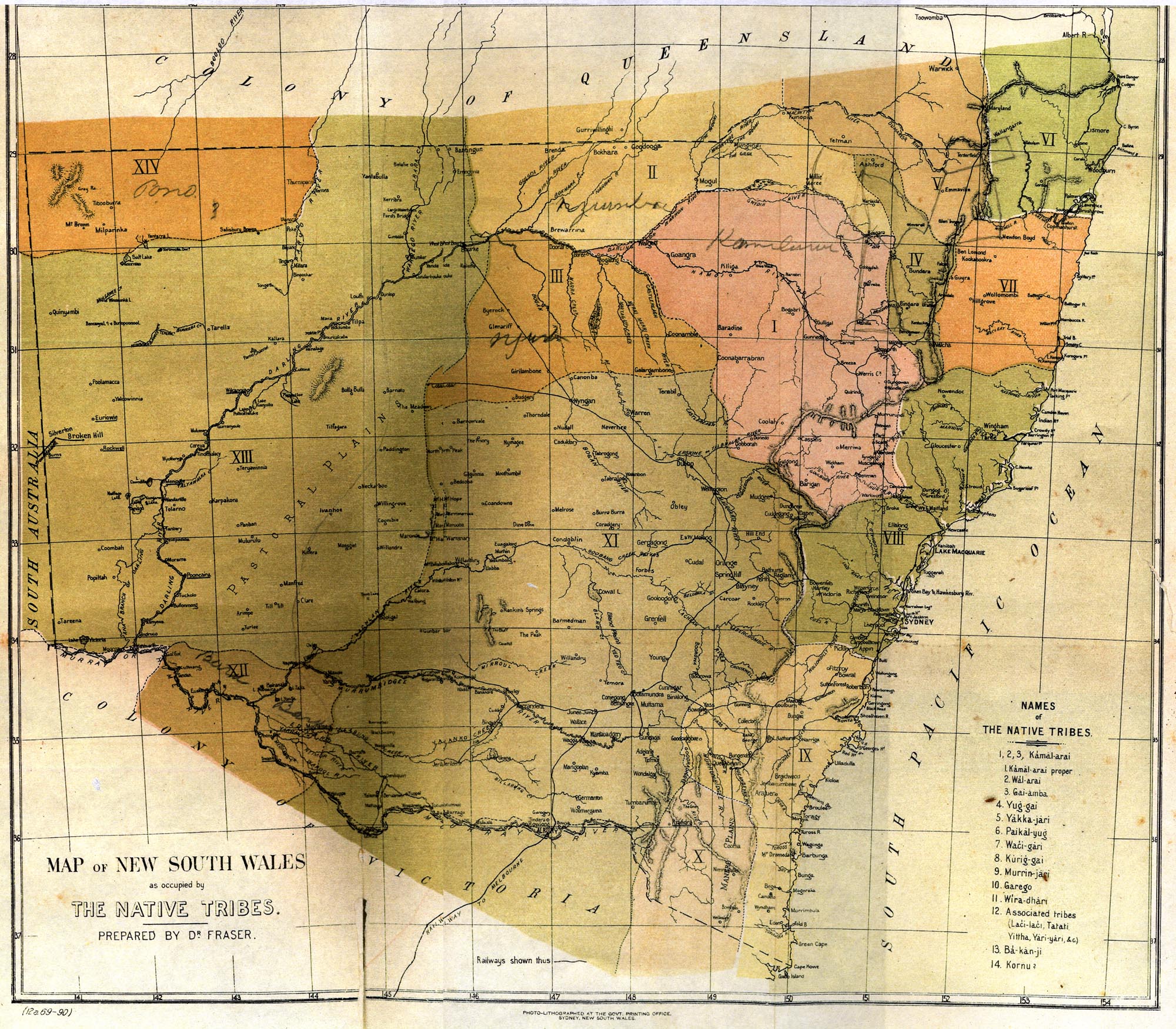
Here is a Google Map of Merriwa that shows the location of places Jimmy Governor lived and worked and committed murders.
Places like Wollar, Ulan, Merriwa, and Gulgong.
Pan left a couple of times and you'll find Breelong, the place where his 'reign of terror' began.
http://maps.google.com.au/maps?q=merriwa+%2B+map&oe=UTF-8&ie=UTF8&hq=&hnear=Merriwa+New+South+Wales&gl=au&z=9

Wednesday, February 23, 2011

WAS ETHEL THE MAIN CAUSE OF THE KILLINGS?

I am rewriting this post following further consideration of the 'domestic' that seems to have occurred between Jimmy Governor and his wife Ethel at their camp at Breelong before he went and killed members of the Mawbey family.
At first I thought the argument they had was about Jimmy's younger brother, Joe, but now I believe that Ethel had told Jimmy she was leaving him.
Not for his younger brother, but because she was dissatisfied with the way she was having to live, without a proper roof over her head and enough food for her and their young son to eat.
"That night my wife and I had a word or two about cooking and something or another about the camp. With that I said, 'I suppose I am in this world alone with no one to care for me. I thought you was my wife.' She said, 'Go to the devil ...' I thought I may as well die, so the Mawbey murders were committed."
Jackie Underwood claimed that when they returned to camp after the murders, Jimmy and Joe had both wanted to kill Ethel and young Sidney, and that he had prevented it.
The fact that both Jimmy and Joe wanted to do it suggests that what Ethel had done had offended both of them, not just Jimmy.
Unbeknown to Jimmy, Ethel had had a foot in both camps, his and the Mawbey's.
She had been complaining to him about the negative comments the women at the Mawbey household had been making about her being married to an Aboriginal man.
But she had also been complaining to Mrs Mawbey about Jimmy and the way she was having to live as a result of being married to him.
This latter fact was revealed by the younger sister of Mrs Mawbey after the murders.
After the five-months pregnant Ethel and Jimmy had married in December 1898, the young couple had lived in a house next door to Ethel's parents in town.
When Jimmy got the 12-month fencing contract with the Mawbey's at Breelong, Ethel's parents and siblings moved to the nearby town of Dubbo.
It must have been hard for 17-year-old Ethel, a new mother of a 12-month-old son, to no longer have her own mother for support.
On top of that, she was living in a bark lean-to beside a creek several miles from the homestead.
At least she had some female company there, even if it was not very ameniable.
It would appear that the impressionable young woman was very much influenced by both Mrs Mawbey and the school teacher, Ellen Kerz.
According to Sarah Mawbey's younger sister who was living at Breelong at the time, Mrs Mawbey had told Ethel that if she wanted a proper roof over her head, instead of a bark lean-to,she had better find another man.
It would appear that this is what Jimmy was really angry about.
But his anger towards his wife who was threatening to abandon him was even more intense.
Jimmy appears to have experienced lots of betrayals in his life, and this was the last straw.
When he was in gaol in Sydney, he used to blame Ethel for making him kill the Mawbeys and the governess at Breelong.
Despite her youth, Ethel was not a passive victim of circumstances.
She could be spiteful and vindictive, and she gave Jimmy a hard time when he would not stand up to the women at the house in her defence.
At the time of the Mawbey murders, many people thought she was to blame, but she appears to have since been exonerated.
In my view, she was definitely a contributing factor.
But the true story of Jimmy Governor is not all black and white.

Wednesday, February 16, 2011

INSIDE THE AGE

The Age newspaper in Melbourne has published online some very interesting historical articles about the Jimmy Governor story.
These 'Snapshot Articles' contain information I have not come across before.
The link ishttp://inside.theage.com.au/view_bestofarticle.php?straction=update&inttype=1&intid=514